
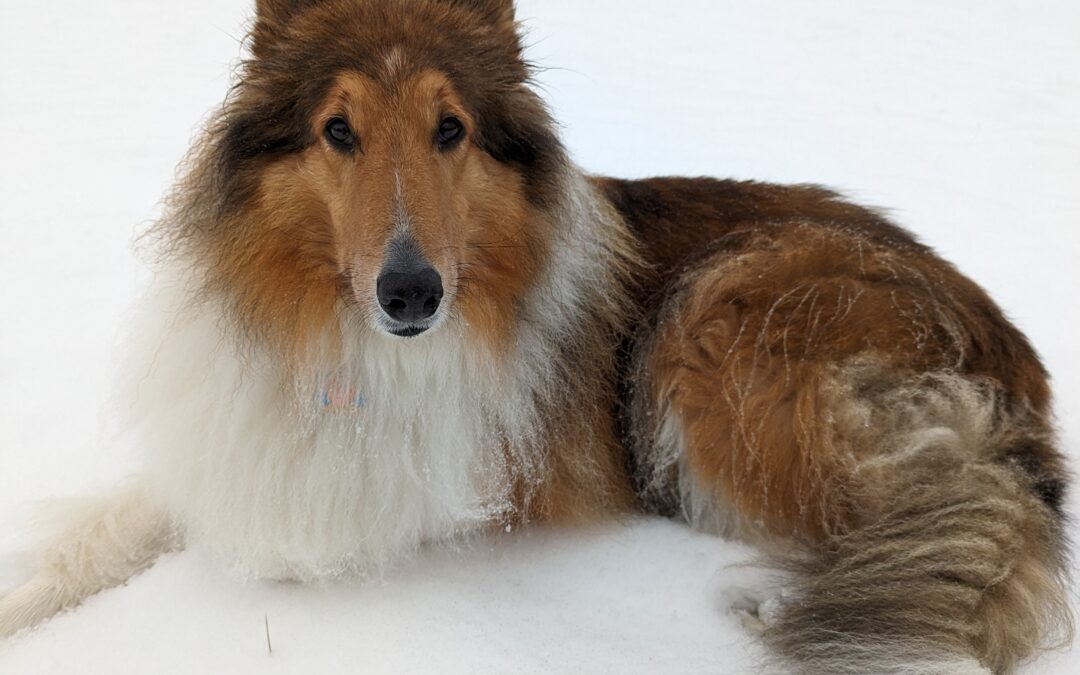
Some veterinarians notice behaviors in our animal companions that could be considered neurodiverse. And I’m intrigued by this new thinking because of Desmond, a dog I worked with.
Neurodiversity in humans
The article, Neurodiversity and What It Means to be Neurodiverse, explains neurodiversity in humans:
“Though neurodiversity was coined in reference to people on the autism spectrum, it has since come to encompass additional ways that brains can function, such as in people with ADHD and dyslexia.
“This concept challenges the traditional ideas of “normal” and helps promote a more inclusive and accepting society where all minds are valued.”
Neurodiversity in animal companions
Veterinarian Alexia Tsakiris, BVetMed, published an article in the American Holistic Veterinary Medical Association Journal titled, “A One Health Approach to Neurodiversity and Attention-Deficit/Hyperactivity Disorder in People and Dogs: Implications for Research, Treatments, and Acceptance.”
Read this short version of the article.
“Like humans, dogs can show neurodivergent behaviors, as seen in attention-deficit/hyperactivity disorder (ADHD)…
“… [U]nderstanding the prevalence of mental health issues and neurodiversity in companion animals,…[and]…[the causes] of mental health and behavior issues in all species may contribute to the breadth of understanding these issues for all patients.”
Is Desmond neurodivergent?
During my sessions with Desmond, his person and I wondered if he was neurodivergent. After a few sessions, we noticed that the animal communication chats weren’t getting through. Oddly, Desmond didn’t seem to understand. As a result, we the reshaped our communication with Desmond. He understood more.
Desmond’s human shares her insights:
“Basically, Desmond exhibits the same type of [neurodivergent] symptoms you see in humans.
“He has weird logic, gets overstimulated by busy environments, has difficulty socializing and misunderstands other dog, cat, and human behaviors.
“He exhibits inappropriate social behavior as well, such as running up to a dog who is yelping in pain, as if it’s something fun and exciting happening!
“Lastly, they diagnosed him with hypothyroidism, which is an autoimmune disease. Interestingly, research in humans show that there are significant overlaps between people on the spectrum and autoimmune diseases.”
To be transparent, animal communication was just one of the many protocols that helped Desmond shift his understanding of the world.
Now that I’ve worked with Desmond, I’m excited to see what new information and protocols emerge for understanding neurodiversity. And will we notice neurodiverse cats? Rabbits? Birds?
Finally, I hope we will have more patience and compassion for these difference once we understand what’s up.
Read, Changing their behavior – not always one and done
Do you think you might have a neurodivergent animal companion? I would love to hear about them! (I’m not qualified to diagnose.)
Yes! I strongly suspect our cat Yoda, who’s in spirit now, was neurodivergent. He was incredibly friendly at first and so was our greeter, but became overstimulated very quickly (think 3 strokes). We had to warn company or they would get bitten, hard (we worked with him through the years, to soften the reaction). He never seemed to be able to interact normally (or as normal as a cat does) with the other 2/3 we had through his years. He became obsessed with certain objects. And Heaven forbid if he got out, because he’d be fine for a minute or 2 and then just lose his mind. I would have to use a sled to protect my body to shepherd him back inside and out would take hours for him to calm back down. couldn’t go to the vet – we had a mobile and even then he had to be sedated heavily. He randomly attacked and bullied his sisters, which never sat well with me, and I intervened as much as I could. He mellowed and we adjusted as he got older, but he was definitely one of the most challenging cats I’ve lived with. He taught me some important life lessons! He was missed, for sure, when he passed for his quirks as well as his innate love that overflowed when he chose to express it
One of our first 3 after marriage, I swore had manic depressive. She was also a tortie, which tend to have some special personalities anyhow, lol!